
Dungeons & Dragons (D&D) stands as the pioneer of tabletop role-playing games (TTRPGs), blending collaborative storytelling with strategic gameplay where dice determine narrative outcomes. The recent success of "Dungeons & Dragons: Honor Among Thieves" and Baldur's Gate 3 has sparked renewed interest in this classic game. Now in its streamlined 5th Edition (D&D 5e) with updated rulebooks, D&D offers its most accessible entry point yet for newcomers.
For those seeking simpler alternatives, numerous board games capture D&D's essence with easier learning curves.
Essential Components for D&D
Players
Rulebooks
Dice Sets
Character Sheets
Miniatures & Game Boards
DM Preparation
1. Gaming Group
D&D thrives with 3-5 players plus a Dungeon Master (DM), though sessions can run with just one player and DM. The DM serves as storyteller, referee, and world-builder - crafting adventures while managing non-player characters (NPCs) and challenges.
While DMing demands preparation, the Player's Handbook and Monster Manual provide strong foundations. Pre-written adventure modules offer ready-to-play scenarios for new DMs.
2. Core Rulebooks
Player's Handbook: The essential guide containing character creation rules, gameplay mechanics, and reference material.
Dungeon Master's Guide: Helps DMs design campaigns, encounters, and worlds.
Monster Manual: Provides statistics and lore for countless adversaries.
Starter Sets offer complete introductions with pre-made characters, adventures, dice, and condensed rules - available physically or digitally.
3. Polyhedral Dice

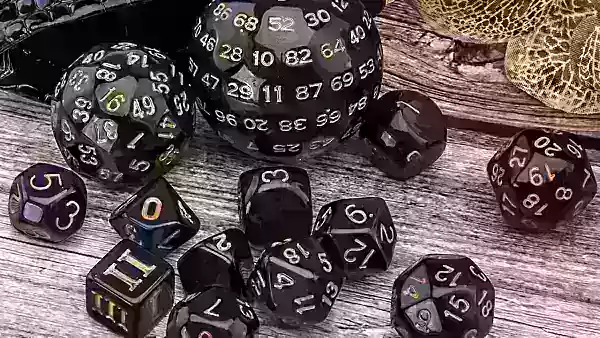
A standard D&D dice set includes: d4, d6, d8, d10, d12, and d20. While one set suffices, many players collect multiple sets.
4. Character Documentation
Character sheets record abilities, inventories, and backstories. Digital tools like DnDBeyond offer automatic sheet generation.
5. Visual Aids (Optional)
Miniatures and battle maps enhance tactical combat visualization. Virtual tabletops (VTTs) like Roll20 provide digital alternatives for remote play.
Getting Started Guide
Gameplay Overview
Character Creation: Design unique heroes using race, class, and background options.
World Building: DMs establish settings through imagination or pre-written modules.
Collaborative Storytelling: Players describe actions while DMs narrate outcomes.
Dice Mechanics: Rolls determine success against difficulty checks (DCs).
Combat System: Turn-based battles using initiative order.
Character Development
Races: Choose from diverse fantasy species with unique traits.
Classes: Determines gameplay style and abilities.
Stats: Strength, Dexterity, Constitution, Intelligence, Wisdom, Charisma.
Equipment: Starting gear based on class and background.
Backstory: Adds depth and DM storytelling opportunities.
Key Game Terms
Actions: Combat maneuvers like attacks or spells.
Initiative: Determines turn order.
HP/AC: Health points and defensive rating.
Leveling: Progresses through XP or milestones.
Player Tips
Share narrative focus
Gradually develop roleplaying skills
Support fellow players
Respect table etiquette
Dungeon Master Advice

Preparation: Develop flexible scenarios
Adaptability: Embrace unexpected player choices
Creative Rewards: Celebrate unconventional solutions
Rule Flexibility: Prioritize fun over strict mechanics
Session Zero: Establish expectations beforehand
Digital Tools: Utilize VTTs and character builders
D&D welcomes all players regardless of experience. With proper preparation and collaborative spirit, unforgettable adventures await. Gather your party and let the dice decide your fate!