
Summary
- A high school student has successfully ported the 1993 classic, Doom, to a PDF file, creating a surprisingly playable, albeit slow, experience.
- Doom's compact size has consistently fueled its porting to unconventional devices, including the Nintendo Alarmo and even within other games.
- The ongoing exploration of Doom's portability underscores its enduring legacy and remarkable relevance in the gaming world.
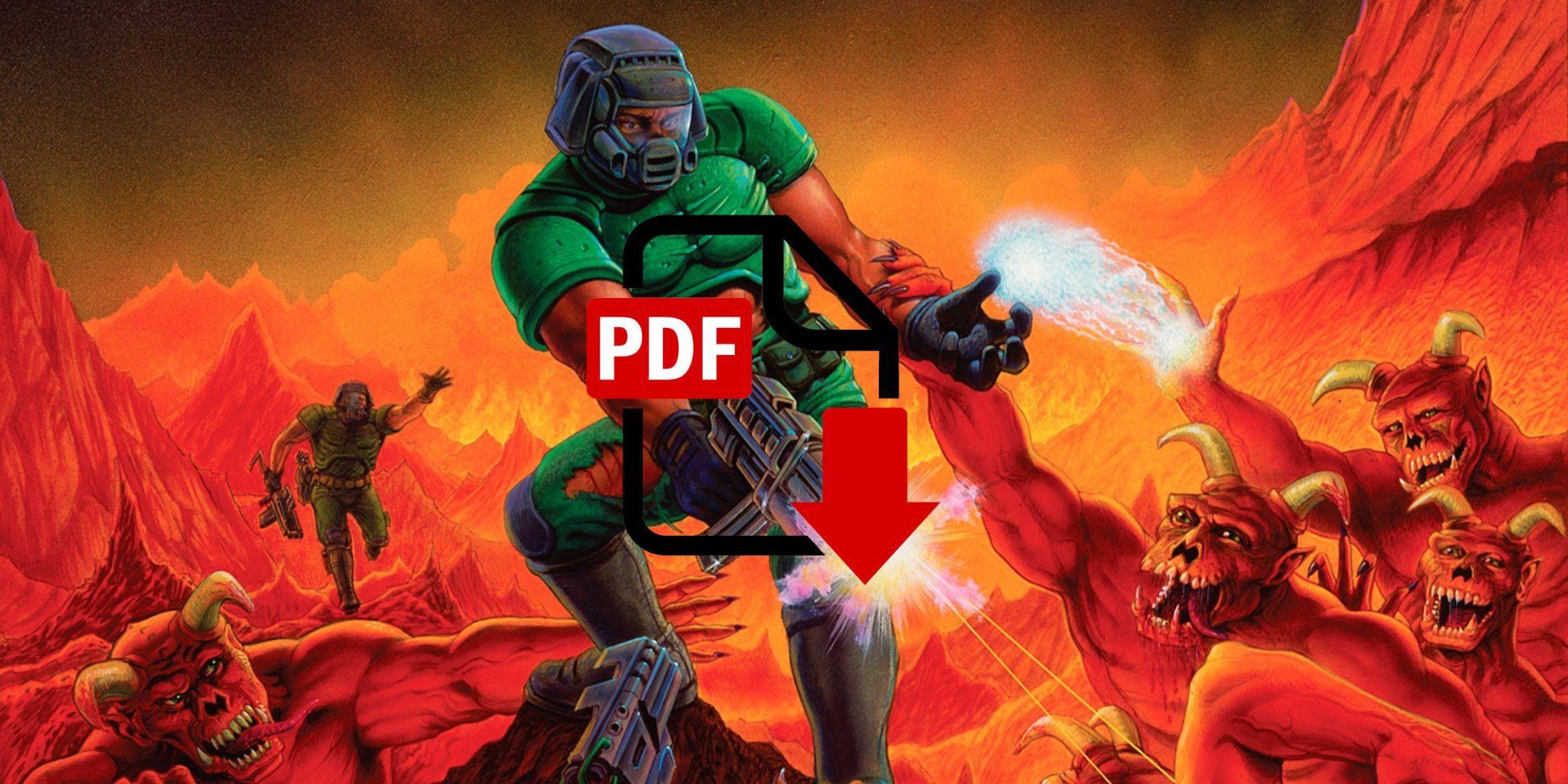
One dedicated high school student has achieved the remarkable feat of porting the legendary Doom (1993) to a PDF file. This addition to the ever-growing list of unexpected platforms supporting Doom is a testament to the game's enduring appeal and the ingenuity of its fans.
Developed by id Software, Doom holds a significant place in gaming history, widely recognized as one of the most influential first-person shooters (FPS) ever created. Its impact is so profound that it essentially coined the term "FPS," with many early games in the genre often dubbed "Doom clones." In recent years, a fascinating trend has emerged: programmers and enthusiasts alike have taken on the challenge of running Doom on the most unconventional devices imaginable – from refrigerators and alarm clocks to car stereos and beyond. This humorous yet impressive trend has now reached a new peak.
High school student and GitHub user ading2210 has successfully ported the classic game into a PDF file. Leveraging the fact that PDFs support JavaScript, functionalities such as 3D rendering, HTTP requests, and monitor detection become possible. While many interactive PDFs use small text boxes as pixels, Doom's 320x200 resolution demands thousands per frame—a significant hurdle. Adding2210 cleverly circumvented this by using one text box per screen row, resulting in a playable, albeit slow, experience. As demonstrated in a video, the PDF version sacrifices color, sound, and text, exhibiting an 80ms per-frame response time.
High School Student Ports Doom (1993) to a PDF
Doom's compact size (2.39 megabytes) is a key factor enabling such feats. Just last November, a programmer successfully made Doom playable on the Nintendo Alarmo, utilizing its dials for movement and side buttons for menu navigation. However, the creativity doesn't stop at physical devices; another player ingeniously ported Doom to run within the game Balandro, albeit with noticeable performance limitations similar to the PDF version.
These projects aren't solely about achieving smooth gameplay on unusual platforms. They highlight the boundless creativity of players and the seemingly endless possibilities for running Doom. The fact that Doom, over 30 years later, remains relevant and a source of ongoing experimentation is a testament to its enduring legacy. As players continue to push boundaries, we can expect even more surprising Doom ports in the future.